
#3 Inclusive design and online learning
Outside of the COVID 19 pandemic, I had never taken a fully online class before this one. As someone who is not tech savvy and will easily lose track if I do not have a rigid structure, I was really anxious to see what this class would be like. This module has given me insight on how the design of learning in general and online learning specifically has to be intentional in order to reduce the barriers that each individual might face in their learning.
Universal Design for Learning (UDL) and inclusivity
What is UDL?
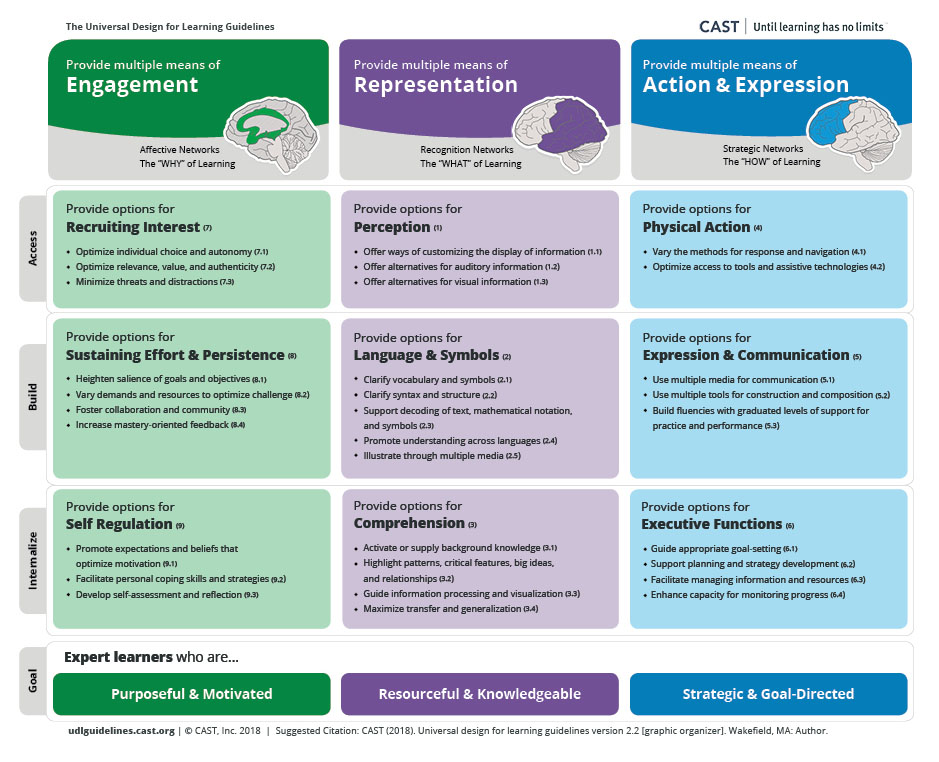
Universal Design for Learning is a framework for teaching design that emphasizes learner expression, representation and engagement. It is about accommodating all learner differences with one framework that all curriculum creators and teachers can use to make their teaching as accessible as possible to all learners. The idea is that every group of students is going to be diverse in some way and that designing with that in mind avoids having to ‘make exceptions’ and end up excluding certain students or a group of students. By intentionally trying to reduce student’s barriers, instructors can keep the expectations the same for all and simply provide different ways for learners to get there.
Inclusive teaching strategies
In her book One Without the Other : Stories of Unity Through Diversity and Inclusion (2016), Shelly Moore defines inclusive education as “providing opportunities with supports for all students to have access to, and contribute to, an education rich in content and experience with their peers”(p. 22). She explains that she started thinking that inclusion meant making the special needs children she worked with do everything with the rest of the school. In reality, that is integration and does not solve the ‘otherness’ problem.
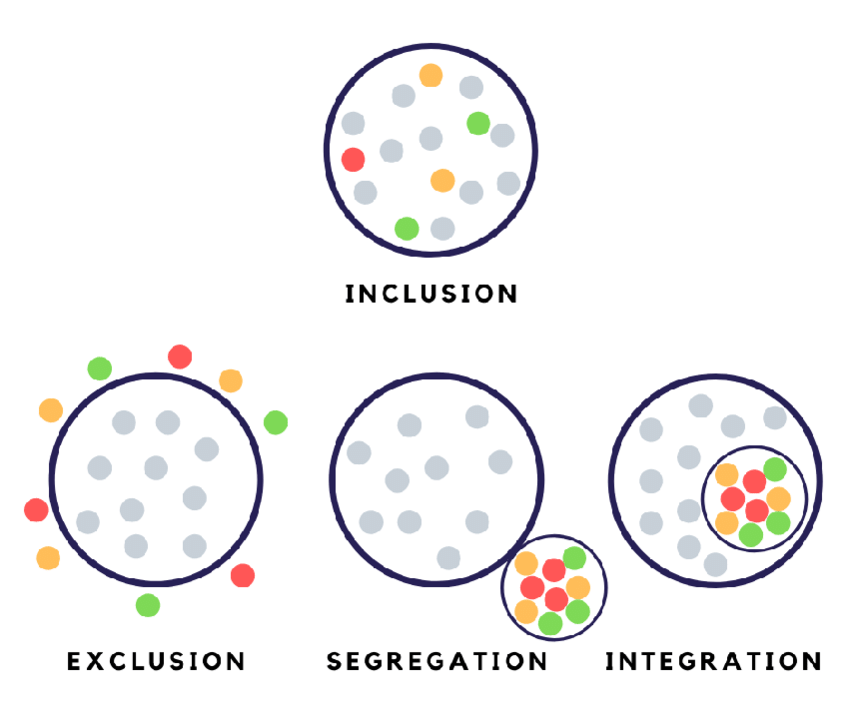
I think the idea of opportunity is essential here. Inclusion is not about making everyone do the same thing or create a different path for every individual student but about ensuring that everyone has the chance to learn in a way that is right for them. By practicing inclusive teaching strategies in an environment that is actively designed to reduce the obstacles that students might face, we are creating the right circumstances for learning.
Characteristics of online learning
Online learning and UDL
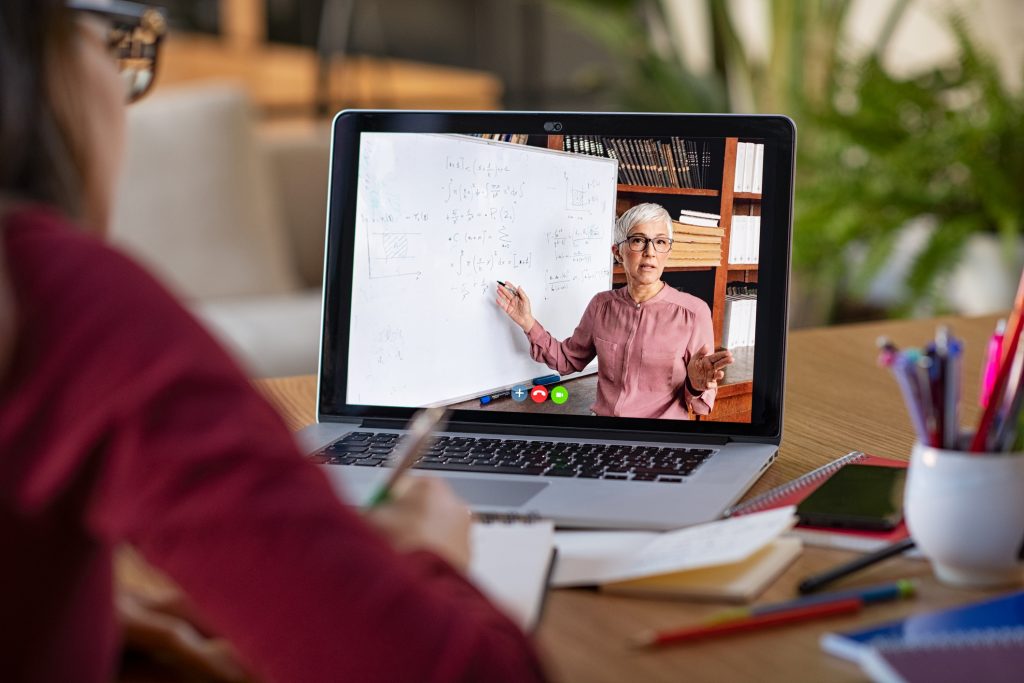
Online learning has many advantages when it comes to accessibility and opportunity. It can give people from all over the world access to class that would be too far away otherwise, can reduce accessibility issues for some and provide a more flexible environment for learning. Online learning has also been found to have some drawbacks, with worse results for people of lower socioeconomic status (Sun et al., 2024). That is probably due to lack of access/ knowledge about technology.
In my research however, I have found that most of the data on online learning came from the pandemic instead of classes designed to be online. COVID 19 forced most educational institutions to switch to full online learning during quarantine, with unprepared students and educators in an emergency situation. I therefore think that these statistics could be biased, but they are still important to take into account.
Synchronous vs. Asynchronous Design
When designing an online class, the instructor can make the activities, presentations and assessments synchronous (at a specific time for all), asynchronous (content available at any time) or even hybrid. Synchronous learning can provide a more guiding and interactive environment for the students. On the other hand, asynchronous gives a very flexible and self paced learning experience. The interactions between the content, the students and the instructor varies depending on the design of the course.
| Asynchronous Learning | Synchronous Learning | |
| Pros | -Self paced -More personal engagement with content | -Easier student/instructor interactions -Engagement is monitored |
| Cons | -More isolated experience -Progress is harder to track | -Difficult scheduling -Limited access and technical issues |
In the end, I think that both have very good aspects and big drawbacks and that the design should depend on the subject and/or the instructor. Moreover, the students should be given the option between synchronous and asynchronous -or online or in person- so they have the opportunity to choose the one that fits best for them.
Resources:
Moore, Shelley. One Without the Other : Stories of Unity Through Diversity and Inclusion, Portage & Main Press, 2016. ProQuest Ebook Central, http://ebookcentral.proquest.com/lib/uvic/detail.action?docID=4832579.
Created from uvic on 2025-10-14 01:28:51.
https://udlguidelines.cast.org/
Sun, Y., Tang, C., & Zhao, Z. (2024). Does online education magnify educational inequalities? evidence from the COVID-19 pandemic. China Economic Review, 88, 102304. https://doi.org/10.1016/j.chieco.2024.102304