#2 How learning design impacts learning
To me, when teaching a course, the design and thought behind it is as important as the actual class content. Writing down precise and achievable objectives help both the instructor and the students plan for and encourage a better and deeper learning experience.
Learning outcomes and how to promote deep learning
Backward design is a structure that puts learning outcomes first when thinking of the structure of a class (Wiggins & McTighe, 2008). By determining what students should come out of the class with, instructors can then design what kind of assessments can provide evidence of acquisition. When all of this is clear, one can then focus on the appropriate presentation methods and activities to get to the desired outcomes.
What makes a good outcome?
I think a good outcome starts with a good verb. It can make it as transparent and easy to understand as possible for the student. That is why I am more drawn towards Bloom’s Taxonomy rather than the SOLO one, which feels more abstract and harder to adapt learning to as a student. Bloom’s Taxonomy provide a hierarchized organization of learning outcomes with, for each level, specific verbs to demonstrate the expectations.
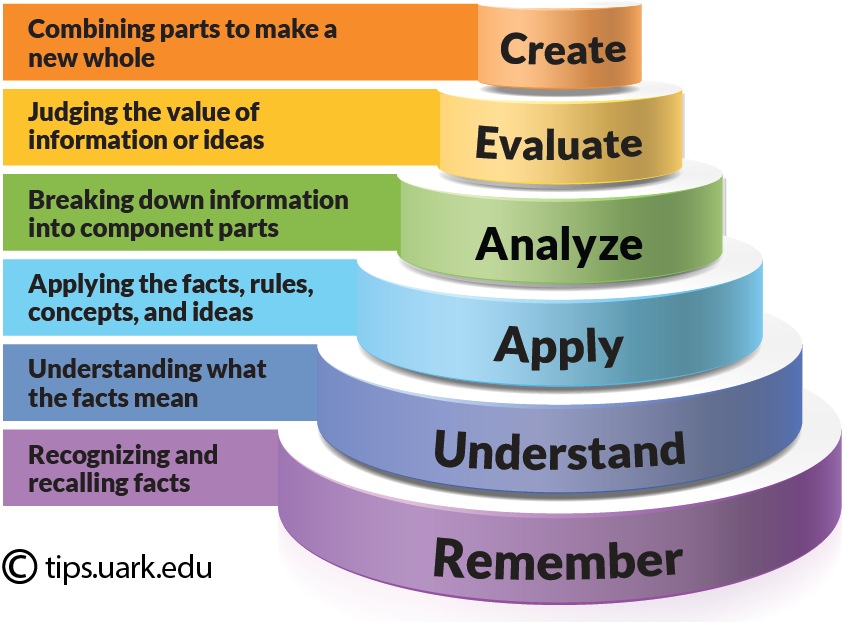
The different levels of the pyramid indicate what kind of learning occurs. As we go up, the learning and use of knowledge becomes deeper and more demanding, changing the activities and assessments required to test it. “Remember” or “Understand” outcomes might be tested with multiple choice questions or short paragraphs whereas “Evaluate” and “Create” tasks will look like project-based courses to have students engage meaningfully with the content.
I find that having a syllabus stating good learning outcomes helps me prepare for a class and understand what is expected of me. For example, instead of “Students will know about the different sub-disciplines in Linguistics,” having an outcome like “Students will be able to describe the different characteristics of the five sub-disciplines in Linguistics and how they interact,” changes my approach to the course. Moreover, I find that when the assessment methods don’t actually test the learning outcomes, like when a course that has “Analyze” level outcomes has a multiple choice questions final, my engagement with the content is decreased.
Deep vs. Surface
This video provides great insight as to what deep learning is in contrast to surface learning. The former is the creation of meaningful networks at the neural level by engaging actively with the knowledge that is presented to us. When we can relate information to something we already know and really build upon it is when deep learning happens. On the other hand, surface learning is more fleeting, mostly focusing on memorization or repetition without engaging with the material.
Based on this knowledge, research has found that project/task-based activities or assessments can promote deep learning by having students engage actively with a problem rather than having it presented to them (Paleenud et al., 2024).
“The cooking project”: how bad design impacts the learning experience
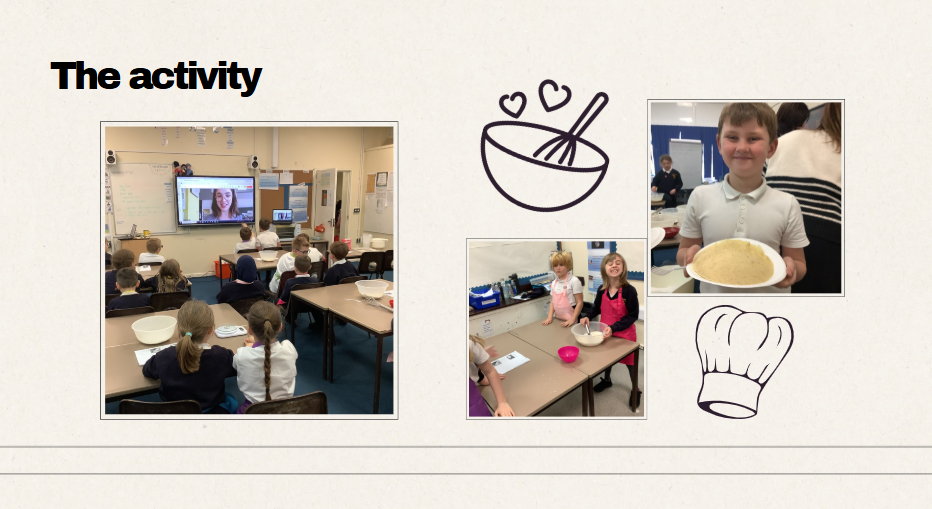
In high school, I organized a language teaching class with a group of 8-9 years old british students. The aim was to make a little language introduction based on an important aspect of French culture: food. Although I gained a lot from this experience and I think it ended up being a good exchange, I now recognize the fundamental design errors I made. I wanted to introduce some vocabulary around cooking (utensils, furniture… etc.), then have a conversation about food culture and how they perceived french cuisine and finally have them make Crêpes while using the vocabulary (to hopefully engage in task-based learning). But where did I go wrong?
- I started the project by thinking of the activity, then the presentation without ever clearly stating any learning outcome.
- The presentation of the information (a vocabulary list) did not match the practical task the students were asked to perform and they didn’t get any chance to memorize it.
- I had written down a full script of what I wanted to say, creating a very rigid structure where the students had little opportunity for intervention.
In the end, I think the best moment in the class was the discussion (and eating the crêpes, of course). The students were genuinely curious and invested, asked for a lot of information and words in French and we had a nice exchange. I realized that this was what the children actually wanted, not my scripted presentation.
If I had to go back, I would try to focus my activity on this cultural exchange and simply use the vocabulary when needed to avoid it feeling forced without any benefits.
Works cited
Wiggins, G. P., & McTighe, J. (2008). Understanding by design. Association for Supervision and Curriculum Development.
Paleenud, I., Tanprasert, K., & Waleeittipat, S. (2024). Lecture-based and project-based approaches to instruction, classroom learning environment, and Deep Learning. European Journal of Educational Research, volume–13–2024(volume–13–issue–2–april–2024), 531–539. https://doi.org/10.12973/eu-jer.13.2.531
https://www.youtube.com/watch?v=vLUFCxl5Zb4&t=44s
https://tips.uark.edu/using-blooms-taxonomy/